


Setting the Pace: Carbon Credits and Climate Leadership in the FG500
Download the full FG500 report to explore how the world’s largest companies are turning climate ambition into credible delivery.
Download nowNew research, published in June 2026, shows that the world’s leading companies are stepping up their climate ambitions, setting new benchmarks and expectations around targets and using high‑quality carbon credits to help achieve their goals.
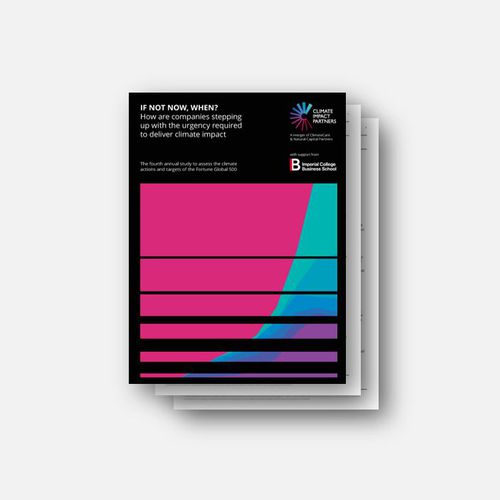
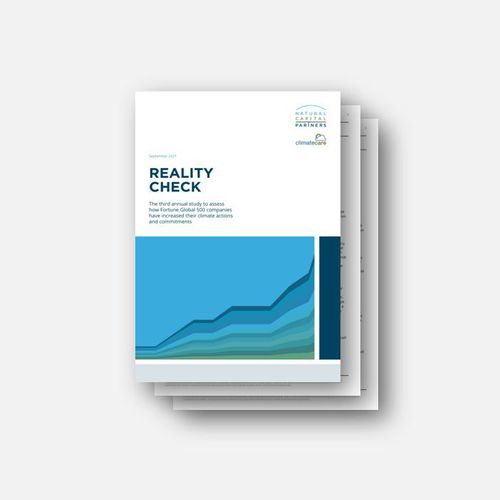
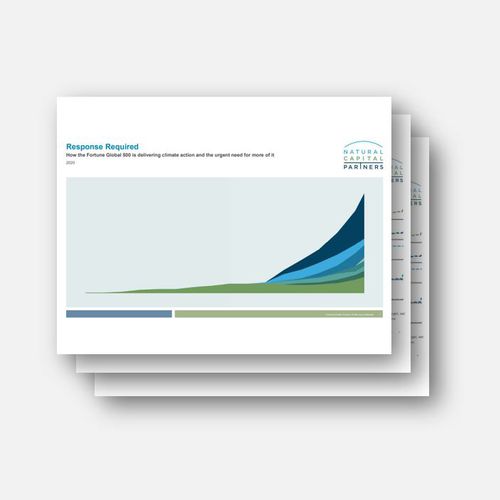
Our annual analysis of Fortune Global 500 (FG500) companies’ climate strategies is now in its seventh year, providing a clear view of an accelerating global business push toward net zero.

Download the full FG500 report to explore how the world’s largest companies are turning climate ambition into credible delivery.
Download now1. From climate commitment to action: Since 2019, corporate climate commitments have more than tripled.
72% of FG500 companies have at least one climate target in 2025, compared with 24% in 2019. Climate strategy is no longer optional. It is embedded into how large organizations manage risk, operate, and grow.
2. From carbon neutral to net zero: 51% of companies now have a net zero target.
For the first time over half of the FG500 have a net zero commitment, representing a dramatic rise from just 8% in 2020. This shows how quickly net zero has become the anchor for long term climate strategy. 81% of these companies are increasing their ambition from carbon neutral targets to net zero.
Understanding how peers in your sector are evolving their approaches will help you build a credible, tailored strategy. Speak to our team for detailed sector analysis and support.
3. From commitment to delivery: 44% of all FG500 companies state they intend to use carbon credits as part of their climate strategies.
Companies with net zero commitments are 11× more likely to use carbon credits than those without. Carbon credits are increasingly part of climate strategies for addressing hard-to-abate emissions, managing Scope 3 complexity and to deliver impact alongside emission reductions. Leading companies such as JPMorganChase and Microsoft are embedding high-quality carbon credits into their long-term strategies, acting now for the future.
Download the full FG500 report to explore how the world’s largest companies are turning climate ambition into credible delivery.
Download nowThis is our seventh time tracking the climate ambition of the Fortune Global 500, which are the world’s largest 500 companies by revenue. In 2025, they generated $41.7 trillion in revenue, $3 trillion in profit and employed more than 70 million people.
These companies alone account for over one-third of the world’s GDP and a high proportion of its carbon emissions. Their influence extends far beyond their own operations through their suppliers, customers, and competitors. Their decisions on climate influence behavior with the group and hold weight more widely. Increasingly they are recognizing the urgency of the climate crisis, the real and immediate risks it represents and the need for business action. And, as this report shows, the leaders are showing how business can be a force for good in driving positive climate impact.
All businesses – no matter their size – can follow this lead. What every business does now is of vital importance on a global and local scale. Our analysis creates a data-led benchmark of global corporate progress on climate and offers an evidence base for credible, high-impact pathways to net zero.
Ambitious climate action from the world’s largest companies has the potential to deliver outsized impact. From reducing emissions to protecting nature, corporate leadership can help close the gap to global climate goals. Find out more here.

Tech-based CDR is a growing area of interest for our clients, so our team wanted to get below the surface to learn firsthand about biochar and bio-oil projects.
Read more
Whether you know them as moors, bogs, fens, mires or peat swamp forest, peatlands have a critical role in tackling the climate crisis.
Read more
Hear how UPS and Kearney are balancing nature and tech carbon removals, defining quality, building the business case, and acting despite uncertainty.
Read more